چطور با n8n و هوش مصنوعی یک دستیار واقعی بسازیم؟
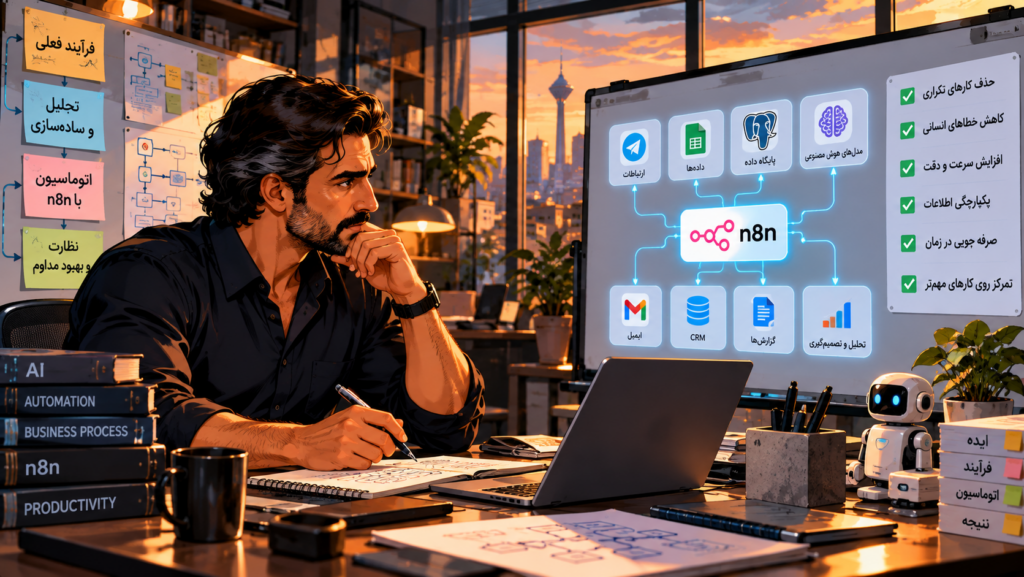
اولین بار که آدم یک Workflow هوشمند میسازد، وسوسه میشود همهچیز را به مدل هوش مصنوعی بسپارد.
پیام را بگیرد.
بفهمد.
تصمیم بگیرد.
جواب بدهد.
ثبت کند.
پیگیری کند.
و اگر شد، قهوه هم برایمان بریزد.
اما پروژه واقعی خیلی زود یک چیز را روشن میکند:
مدل هوش مصنوعی فقط یکی از قطعات سیستم است.
دستیار واقعی چیزی بیشتر از یک چتبات است.
برای من، ساخت دستیار هوشمند با n8n از جایی جدی شد که فهمیدم باید مثل یک فرآیند سازمانی به آن نگاه کنم، نه مثل یک پنجره چت.
اول باید ورودی مشخص باشد.
پیام از کجا میآید؟
تلگرام؟
فرم سایت؟
ایمیل؟
صدا؟
سیستم داخلی؟
بعد باید بفهمی اطلاعات لازم کجاست.
Google Sheet؟
CRM؟
PostgreSQL؟
فایل؟
پایگاه دانش؟
بعد نوبت تصمیم است.
کدام درخواست را هوش مصنوعی میتواند خودش جواب بدهد؟
کدام باید به انسان ارجاع شود؟
کدام نیاز به تأیید دارد؟
کدام اصلاً نباید خودکار انجام شود؟
همین سه مرحله ساده، فرق یک Demo جذاب و یک دستیار قابلاستفاده را میسازد.
در Demo همهچیز خوب است.
ورودی تمیز است.
کاربر سؤال قابلفهم میپرسد.
API جواب میدهد.
اینترنت قطع نمیشود.
هیچ دادهای ناقص نیست.
دنیای واقعی دقیقاً برعکس است.
پیام نصفه میآید.
صدا نویز دارد.
نام مشتری با سه شکل مختلف ثبت شده.
فایل پیدا نمیشود.
API Timeout میدهد.
و همان لحظهای که فکر میکنی همهچیز تمام شده، کاربر یک درخواست خارج از سناریو میفرستد.
برای همین به مرور به این نتیجه رسیدم که یک دستیار واقعی حداقل پنج لایه دارد.
لایه اول: ورودی.
باید ورودی را استاندارد کنی.
متن، صدا، فایل یا داده هرچه هست، باید به شکلی برسد که مرحله بعد بتواند با آن کار کند.
لایه دوم: زمینه.
مدل باید بداند با چه کسی حرف میزند و چه اطلاعاتی مجاز است استفاده کند.
بدون Context، جواب هوشمند هم میتواند بیربط باشد.
لایه سوم: تصمیم.
اینجا مهمترین سؤال این نیست که AI چه میگوید.
این است که سیستم بعد از جواب AI چه کاری باید بکند.
پیام بفرستد؟
ردیف ثبت کند؟
تسک بسازد؟
برای تأیید مدیر بفرستد؟
یا فقط پیشنهاد بدهد و هیچ اقدامی نکند؟
لایه چهارم: کنترل.
هر اتوماسیون خوب باید بداند کجا متوقف شود.
من به سیستمهایی که همهچیز را بدون Gate جلو میبرند اعتماد ندارم.
در کار واقعی، بعضی تصمیمها باید Approval داشته باشند.
مخصوصاً وقتی پای قیمت، پول، مشتری، ارسال یا داده حساس وسط است.
لایه پنجم: خطا.
این بخشی است که در خیلی از دموها اصلاً دیده نمیشود.
اگر API جواب نداد چه؟
اگر فایل خراب بود چه؟
اگر مدل خروجی غیرقابلاستفاده داد چه؟
اگر کاربر سه بار یک درخواست را فرستاد چه؟
اگر مرحله وسط Workflow شکست خورد، چه کسی میفهمد؟
من معتقدم Error Handling جزئی از طراحی است، نه چیزی که آخر پروژه اضافه شود.
یکی از مزیتهای n8n برای من همین است.
میتوانی فرآیند را ببینی.
ورودی، تصمیم، سرویسها، خطا و خروجی را کنار هم ببینی.
این دید بصری کمک میکند مسئله را فقط به مدل زبانی تقلیل ندهی.
در یکی از الگوهایی که زیاد از آن استفاده میکنم، دستیار به جای اینکه مستقیماً همهچیز را انجام دهد، چند ابزار مشخص دارد.
ابزار جستوجو.
ابزار ثبت.
ابزار ارسال پیام.
ابزار خواندن اطلاعات.
ابزار ارجاع به انسان.
مدل تصمیم میگیرد از کدام ابزار استفاده کند، اما محدوده ابزارها را سیستم تعیین میکند.
این برای من تعریف عملی Agent است.
نه موجودی که هر کاری خواست بکند.
بلکه مدلی که داخل چارچوب مشخص، ابزار مناسب را انتخاب میکند.
یک نکته دیگر حافظه است.
خیلی از دستیارها در هر پیام از صفر شروع میکنند.
این در استفاده واقعی آزاردهنده است.
اگر سیستم قرار است با مشتری یا تیم داخلی کار کند، باید بداند قبلتر چه اتفاقی افتاده.
اما حافظه هم باید کنترل شود.
همهچیز لازم نیست برای همیشه ذخیره شود.
باید مشخص باشد چه دادهای مهم است، چه دادهای موقت است و چه چیزی اصلاً نباید ذخیره شود.
بعد میرسیم به بخش جذابتر:
اتصال چند سیستم.
مثلاً پیام میآید.
صدا تبدیل به متن میشود.
متن تحلیل میشود.
اطلاعات مشتری از پایگاه داده خوانده میشود.
پاسخ ساخته میشود.
نتیجه در سیستم ثبت میشود.
و اگر لازم بود برای فرد مسئول اعلان میرود.
اینجا دیگر با یک چتبات طرف نیستیم.
با یک فرآیند کاری طرفیم که بخشی از تصمیمش هوشمند شده.
من فکر میکنم ارزش واقعی n8n و AI دقیقاً همینجاست.
در اتصال فاصلههای بین ابزارها.
نه فقط تولید متن.
خیلی از سازمانها اطلاعات دارند، ابزار دارند، آدم خوب هم دارند.
مشکل این است که اینها به هم وصل نیستند.
دستیار واقعی باید این فاصله را کم کند.
یک اصل مهم دیگر برای من این است:
تا وقتی فرآیند دستی را نفهمیدهای، Agent نساز.
اول یکبار مسیر را بدون AI طراحی کن.
Trigger چیست؟
داده چیست؟
تصمیم چیست؟
خروجی چیست؟
مسئول انسانی کیست؟
بعد ببین کجا AI واقعاً ارزش اضافه میکند.
گاهی فقط در طبقهبندی.
گاهی در خلاصهسازی.
گاهی در تولید پاسخ.
گاهی در انتخاب ابزار.
قرار نیست همه Workflow هوشمند باشد.
هوشمندی خوب، دقیقاً همان جایی قرار میگیرد که ابهام انسانی وجود دارد.
بقیه مراحل بهتر است تا جای ممکن قطعی و قابلپیشبینی باشند.
این ترکیب برای من مهم است:
بخش قطعی را با Rule.
بخش مبهم را با AI.
بخش حساس را با تأیید انسان.
اگر این سه درست کنار هم قرار بگیرند، دستیار از اسباببازی تکنولوژیک تبدیل میشود به ابزار واقعی کسبوکار.
برای همین امروز وقتی کسی میگوید «یک AI Agent میخواهم»، اولین سؤال من مدل نیست.
میپرسم:
این Agent دقیقاً قرار است کدام فرآیند را بهتر کند؟
اگر جواب این سؤال روشن باشد، n8n و هوش مصنوعی ابزارهای فوقالعادهای هستند.
اگر روشن نباشد، فقط یک Workflow پیچیده میسازیم که کسی نمیداند چرا وجود دارد.
The first time you build an intelligent workflow, it is tempting to hand everything to the AI model.
Receive the message.
Understand it.
Decide.
Answer.
Record.
Follow up.
And if possible, make the coffee too.
But real projects quickly make one thing clear:
The AI model is only one component of the system.
A real assistant is more than a chatbot.
For me, building an intelligent assistant with n8n became serious when I started treating it as an organizational process rather than a chat window.
First, the input has to be clear.
Where does the message come from?
Telegram?
A website form?
Email?
Voice?
An internal system?
Then you need to know where the required information lives.
Google Sheets?
A CRM?
PostgreSQL?
Files?
A knowledge base?
Then comes decision-making.
Which requests can AI answer on its own?
Which should be handed to a human?
Which require approval?
Which should never be automated?
Those three simple stages are what separate an attractive demo from an assistant people can actually use.
In a demo, everything behaves.
The input is clean.
The user asks a clear question.
The API responds.
The internet does not disappear.
No data is missing.
The real world is the opposite.
Messages arrive incomplete.
Voice recordings contain noise.
Customer names are stored in three different forms.
Files cannot be found.
APIs time out.
And just when you think the scenario is complete, the user sends something completely outside it.
That is why I gradually came to see a real assistant as having at least five layers.
Layer one: input.
The input needs to be normalized.
Text, voice, file, or data—whatever it is—must reach the next stage in a usable form.
Layer two: context.
The model needs to know who it is talking to and which information it is allowed to use.
Without context, even an intelligent answer can be irrelevant.
Layer three: decision.
The most important question here is not what the AI says.
It is what the system should do after the AI responds.
Send a message?
Create a record?
Create a task?
Send something to a manager for approval?
Or only make a suggestion and take no action?
Layer four: control.
Every good automation should know where to stop.
I do not trust systems that push every decision forward without a gate.
In real business, some actions need approval.
Especially when price, money, customers, delivery, or sensitive data are involved.
Layer five: failure.
This is the part many demos never show.
What happens if the API does not respond?
What if the file is broken?
What if the model returns unusable output?
What if the user submits the same request three times?
If a middle step in the workflow fails, who knows?
I believe error handling is part of design, not something added at the end.
One reason n8n works well for me is that you can see the process.
You can see the input, decisions, services, failures, and outputs next to one another.
That visual view helps prevent the entire problem from being reduced to a language model.
In one pattern I use often, the assistant does not directly do everything.
It receives a limited set of tools.
A search tool.
A recording tool.
A messaging tool.
A reading tool.
A human handoff tool.
The model chooses which tool to use, but the system defines the available boundaries.
That is my practical definition of an agent.
Not something that can do whatever it wants.
But a model that selects the right tool inside a controlled framework.
Memory is another important part.
Many assistants start from zero with every message.
That becomes frustrating in real use.
If the system works with customers or internal teams, it should understand what happened before.
But memory must also be controlled.
Not everything needs to be stored forever.
You need to decide what is important, what is temporary, and what should never be stored.
Then comes the more interesting part:
Connecting multiple systems.
A message arrives.
Voice becomes text.
The text is analyzed.
Customer information is read from a database.
A response is created.
The result is recorded.
And when necessary, the responsible person receives an alert.
At that point, this is no longer a chatbot.
It is a business process whose decision layer has become partly intelligent.
That is where I see the real value of n8n and AI.
In connecting the gaps between tools.
Not only in generating text.
Many organizations already have data, tools, and good people.
The problem is that they are disconnected.
A real assistant should reduce that distance.
One more principle matters to me:
Do not build an agent before you understand the manual process.
Design the path once without AI.
What is the trigger?
What is the data?
What is the decision?
What is the output?
Who is the responsible human?
Then ask where AI actually adds value.
Sometimes it is classification.
Sometimes summarization.
Sometimes response generation.
Sometimes tool selection.
The entire workflow does not need to be intelligent.
Good intelligence belongs exactly where human ambiguity exists.
The rest should remain as deterministic and predictable as possible.
This combination matters to me:
Use rules for deterministic work.
Use AI for ambiguity.
Use human approval for sensitive actions.
When those three are placed correctly, an assistant stops being a technology toy and becomes a real business tool.
So today, when someone says, ‘I want an AI agent,’ my first question is not which model.
I ask:
Which process is this agent supposed to improve?
If that answer is clear, n8n and AI are extraordinary tools.
If it is not, we are only building a complicated workflow that nobody knows why they need.