اجرای کد تعاملی برای کاهش فراخوانی مدل در عاملهای رباتیک
PyRUA-Lean با ترکیب برنامهنویسی پایتون، بازخورد انتخابی و وضعیت پایدار دروناپیزودی، در ۷۰۰ نمونه شبیهسازیشده نرخ موفقیت بالاتری از عامل ابزارمحور گزارش میکند؛ اما تعمیمپذیری آن به ربات واقعی و مدلهای دیگر هنوز آزموده نشده و داوری مستقل آن تأیید نشده است.
فهرست مطالب
این معرفی بر نسخه پیشچاپ موجود مقاله در arXiv با شناسه 2610.01939v1، بارگذاریشده در ۱ اکتبر ۲۰۲۶، تکیه دارد؛ مقاله داوری همتا را ذکر نکرده و وضعیت داوری مستقل آن در این بخش تأیید نشده است. مقاله PyRUA-Lean را معرفی میکند: یک رابط اجرای تعاملی پایتون برای عاملهای رباتیک مبتنی بر مدل بیناییـزبانی. مسئله اصلی، هزینه توکنی ناشی از فراخوانیهای مکرر مدل، بازگشت خودکار تصاویر دوربین و انباشت نتایج میانی در گفتوگو است.
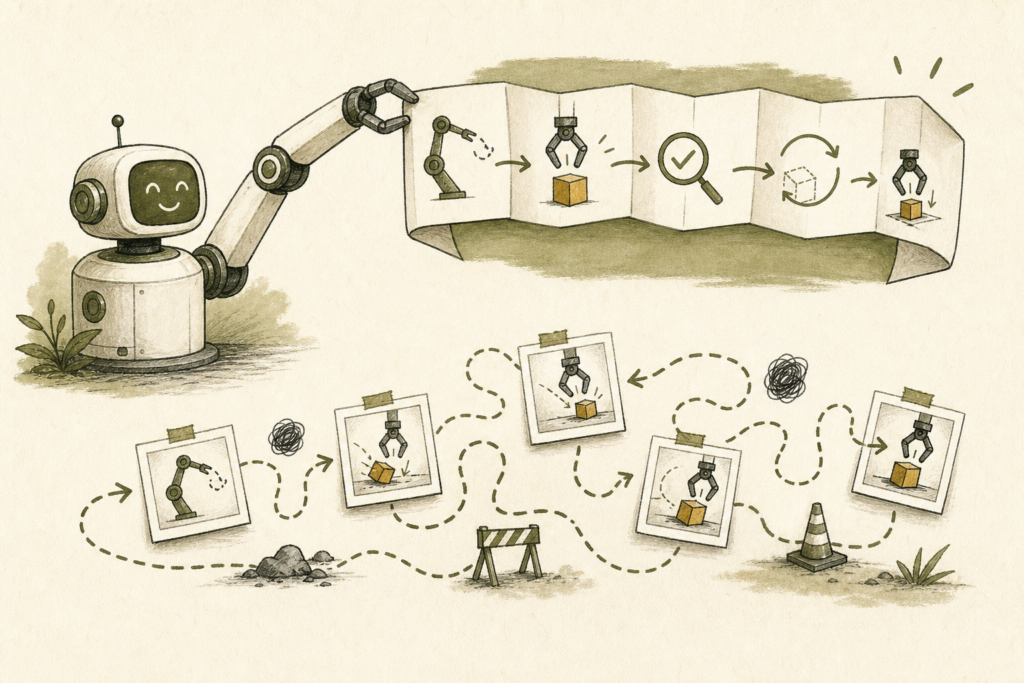
در روش ابزارمحور مبنا (RPent)، عملی که به نتیجه گام پیشین وابسته است معمولاً به نوبت تازهای از مدل نیاز دارد. در PyRUA-Lean، مدل بهجای انتخاب یک ابزار در هر نوبت، یک سلول پایتون مینویسد که چند primitive حرکتی، ادراکی یا سیاست دیداریـزبانیـکنشی را ترکیب میکند. برنامه میتواند نتیجه حرکت را بررسی کند، تنها در صورت موفقیت گام بعدی را اجرا کند، بازکوشش محلی داشته باشد و داده میانی را در فضای نام پایدار همان اپیزود نگه دارد.
تنها خروجیهای صریح چاپشده و تصاویر درخواستی با robo.show به مدل بازگردانده میشوند؛ بنابراین، وجود داده در زمان اجرا لزوماً به ورود آن به متن بعدی مدل منجر نمیشود. این سازوکار تاریخچه پیشین گفتوگو را حذف نمیکند؛ Codex CLI همچنان کل گفتوگو را نگه میدارد و تنها نزدیک ۲۷۲ هزار توکن آن را فشرده میکند. مقاله نمونهای ارائه میکند که در آن محاسبه هندسی محل قرارگیری کاسه، کاهش، رهاسازی و درخواست تصویر مشروط، در یک سلول اجرا میشود.
آزمایش اصلی ۷۰۰ نمونه جفتشده و ۱٬۴۰۰ اپیزود شبیهسازیشده را پوشش میدهد: ۴۰ وظیفه LIBERO-PRO، ۵۰ وظیفه RoboTwin 2.0 و ۵۰ وظیفه Target50 از RoboCasa365، هرکدام با پنج seed. هر دو عامل از برنامهریز GPT-6 Astra با تلاش استدلالی بالا، primitiveهای یکسان RPent، سیاستهای VLA ثابت و بدون حافظه میاناپیزودی استفاده کردند. سقف فراخوانی مدل ۴۰ بود، جز وظایف ترکیبی RoboCasa365 با سقف ۱۰۰؛ حد زمانی نیز دو ساعت بود.
نرخ موفقیت کلی از ۶۳٫۱٪ در عامل ابزارمحور به ۷۱٫۷٪ در PyRUA-Lean رسید: افزایشی ۸٫۶ واحد درصد، یا حدود ۱۴٪ نسبی. در نمونههایی که هر دو عامل حل کردند، میانگین فراخوانیها از ۱۷٫۰ به ۸٫۷ و توکن ورودی از ۷۸۸ هزار به ۲۷۶ هزار کاهش یافت؛ یعنی بهترتیب ۴۹٪ و ۶۵٪ کمتر. هزینه برآوردی فهرستقیمت نیز از ۱٫۶۳ به ۰٫۷۴ دلار در هر اپیزود رسید. تحلیل مقاله، کاهش تعداد فراخوانیها را عامل اصلی صرفهجویی توکنی میداند، نه الزاماً کوچکترشدن هر اعلان.
محدودیتها مهماند: ارزیابی فقط با GPT-6 Astra، پشتهها و primitiveهای RPent و در شبیهسازی انجام شده و برای هر عامل در هر نمونه تنها یک اجرا وجود دارد. عملکرد روی ربات فیزیکی، مدلهای برنامهریز دیگر، پیکربندیهای متفاوت primitive و تغییرپذیری اجرای تکراری آزموده نشده است. همچنین مقایسه، کل رابطها را میسنجد و سهم علّی ترکیب primitiveها، وضعیت پایدار و بازخورد انتخابی را کاملاً جدا نمیکند. صرفهجویی نیز در وظایف اتمیِ متکی به VLA کوچکتر است و معیارهای اصلی هزینه فقط روی نمونههای حلشده توسط هر دو عامل گزارش شدهاند.
This introduction relies on the available preprint of the paper, arXiv:2610.01939v1, posted on October 1, 2026; the paper does not mention peer review, and its independent peer-review status is not verified here. The paper introduces PyRUA-Lean, an interactive Python-execution interface for vision-language-model robot agents. Its central problem is token overhead from repeated model calls, automatic camera-image returns, and the accumulation of intermediate results in the conversation.
In the tool-calling baseline (RPent), an operation dependent on a previous result generally requires a new model turn. In PyRUA-Lean, rather than selecting one tool per turn, the model writes a Python cell that composes several motion, perception, or vision-language-action primitives. The program can inspect motion outcomes, execute a next step only after success, perform local retries, and retain intermediate data in a persistent namespace within the same episode.
Only explicitly printed outputs and images requested through robo.show are returned to the model. Thus, data available in the runtime need not enter the model’s next context. This mechanism does not delete earlier conversation history: Codex CLI still retains the full conversation and compacts it only near 272,000 tokens. The paper presents an example where geometric placement computation, lowering, release, and a conditional image request run in one cell.
The main evaluation covers 700 paired instances and 1,400 simulated episodes: 40 LIBERO-PRO tasks, 50 RoboTwin 2.0 tasks, and 50 RoboCasa365 Target50 tasks, each at five seeds. Both agents used the GPT-6 Astra planner at high reasoning effort, identical RPent primitives, frozen VLA policies, and no cross-episode memory. The model-call budget was 40, except for RoboCasa365 composite tasks with 100 calls; the time limit was two hours.
Overall success rose from 63.1% for tool calling to 71.7% for PyRUA-Lean: an 8.6-percentage-point, or roughly 14% relative, increase. On instances solved by both agents, mean calls declined from 17.0 to 8.7 and input tokens from 788,000 to 276,000, representing 49% and 65% reductions. Estimated list-price cost fell from $1.63 to $0.74 per episode. The paper attributes most token savings to fewer model calls, rather than necessarily smaller prompts per call.
Important limitations remain. Evaluation used only GPT-6 Astra, RPent stacks and primitives, and simulation, with one run per agent-instance pair. Physical-robot performance, other planners, alternative primitive configurations, and variation across repeated runs were not tested. Moreover, the comparison evaluates complete interfaces and does not fully isolate the causal effects of primitive composition, persistent state, and selective feedback. Gains are smaller on VLA-dominated atomic tasks, and the main efficiency metrics are reported only on instances both agents solved.
پژوهشهای بیشتری بخوان
مقالات بیشتر درباره هوش مصنوعی و پژوهشهای تازه را ببین.